
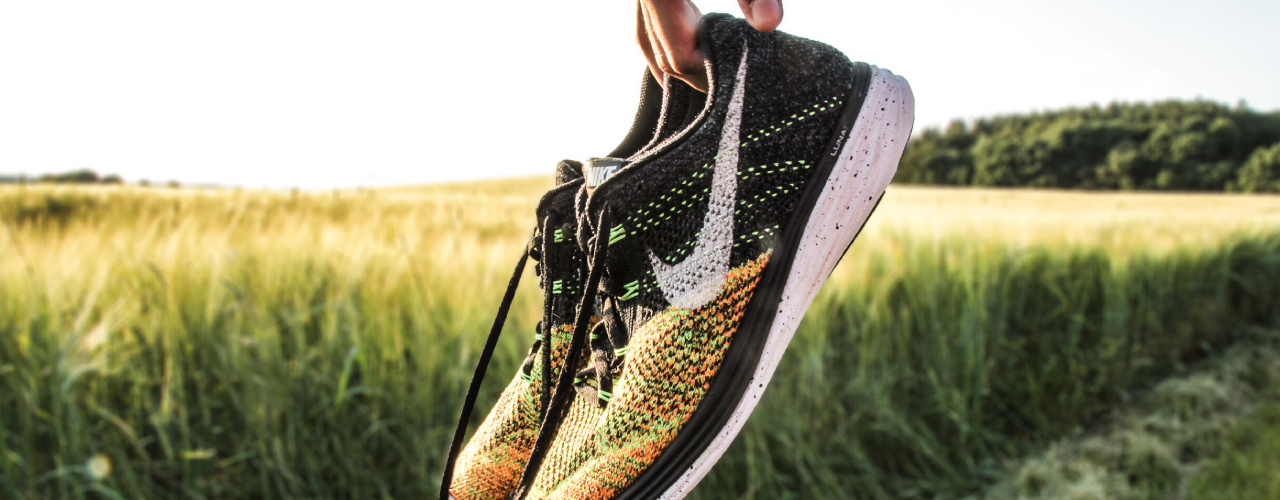
Asics. Brooks. Saucony. Nike. Hoka One One. Altra. The number of running shoe manufacturers we have access to is extensive. And with each running shoe produced, a hopeful declaration is made to the customer: run faster, hurt less, go farther. So how do we sift through the myriad of options and settle on the best running shoe for us? Here are a few helpful tips:
- Comfort is key
- Millions of dollars have been spent researching and developing systems to help individuals select the perfect running shoe for them, within a particular line. Have you ever stood on a fancy pressure sensor at a shoe store geared at helping you pick out a shoe? This is in that vein. While this is not necessarily a bad thing, it may not be adding any value. Researchers have concluded that the best predictor of a running shoe being appropriate for the individual does not require fancy foot scans or pressure maps. Rather, the best predictor of a running shoe being appropriate for an individual is comfort. So simple. By in large, if you are attempting to decide between two different running shoes, evidence suggests the one that is more comfortable is the better option for you.
- Know the lingo
- Do you know the difference between a stability shoe, a neutral shoe, and a minimalist shoe? Do you know what heel-toe drop refers to? Knowing the vocabulary and relevant measures within the running shoe industry can help you make more informed choices for yourself. For instance, a stability shoe aims to limit excessive foot motion during the running cycle, while a neutral shoe alternatively aims to maximize cushion. A minimalist shoe attempts to reduce the weight of the shoe in hopes of improving running efficiency and, subsequently, speed. Heel-toe drop refers to how much higher off of the ground your heel is as opposed to your toes when donning a running shoe. All of these are important factors to consider when selecting a running shoe, given that comfort still needs to come first.
- Be a bit of a skeptic
- While some running shoes are more popular than others, there is no one running shoe that has shown to be superior to others at reducing injury risk or vastly improving performance, despite advertising campaigns claiming otherwise. By in large, the overall rate of running-related injury is relatively the same regardless of footwear. However, some running shoe designs have higher rates of certain types of injury, with lower rates of others. For example, the barefoot running craze resulted in an increase in production of minimalist running shoes, with claims of reducing your injury risk. While some minimalist running shoes have been shown to reduce the risk of knee pain, this comes at the expense of an increased risk of Achilles tendinopathy and forefoot stress fractures. The reason? Running in a shoe with less cushioning tends to move our strike pattern to more of a mid or forefoot strike, reducing the impact force on our knee while increasing the load to our forefoot and Achilles. While the injury profile may be changed, the overall injury risk is the same. So, be a bit leery of any particular shoe manufacturer’s claim that a specific shoe in their line will dramatically reduce your injury risk.
- Try on numerous pairs
- Given that comfort is the most important factor in selecting an appropriate running shoe, it is integral that you try on a number of pairs of shoes from different manufacturers in order to find the best fit. Ordering running shoes online does not provide this opportunity. Even if you are purchasing the same line of shoes from a manufacturer, it is important to note that small changes can be made to the design and fit from year-to-year. And, your foot can change a bit over time. So, again, you must try on several pairs to find the best fit for you.
- Focus on the fundamentals
- While selecting an appropriate running shoe is an important component within a training program, the most significant factor related to injury and performance is your training program itself. No shoe will protect you if you are running too much or increasing your mileage or speed too rapidly. You must stick to the tried-and-true principles of training in order to set yourself up for success. In other words, regardless of your footwear, there are no shortcuts to the finish line.
Happy shopping!