
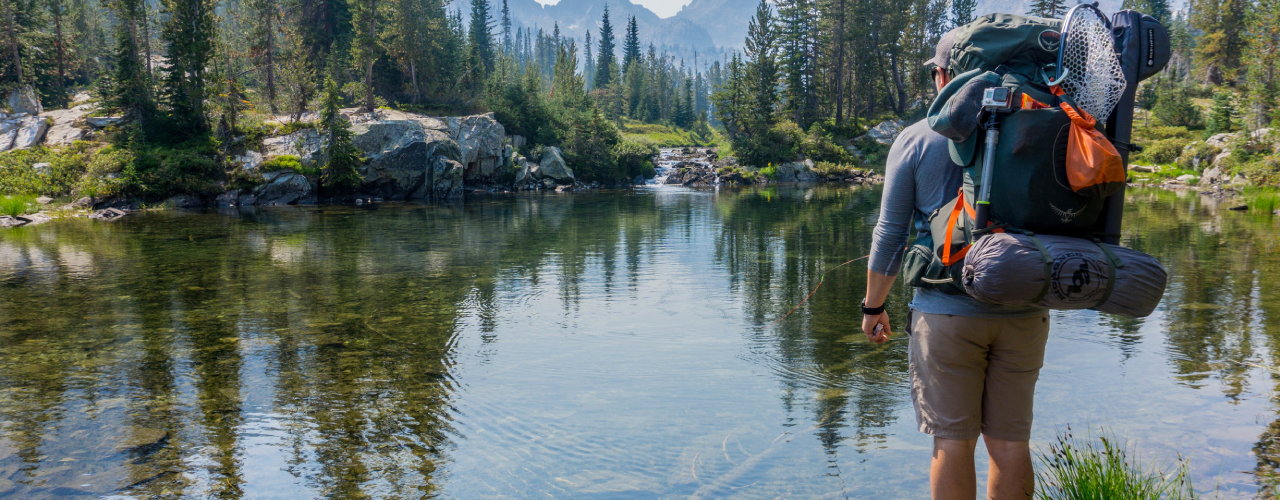
As temperatures rise and snow levels melt, many of you have visions of epic backpacking trips in the mountains this summer. But how do you train for the rigors of dozens of miles of trails with thousands of feet of elevation gain and a heavy load on your back? When considering a training program for backpacking season, it is important to take in to consideration both injury prevention and performance. Over 200,000 individuals are treated in emergency departments each year for injuries related to outdoor recreational activities. Common injuries sustained while hiking or backpacking include ankle sprains, patellofemoral pain syndrome, and low back pain. Training plans should incorporate the following principles in order to reduce the risk of these conditions:
- Programs to minimize the risk of initial or recurrent ankle sprains should focus on muscle control, balance, and proprioceptive deficits. Perform this single leg balance progression 3-4 days per week of ankle sprains.
- Programs to minimize the risk of anterior knee pain (a.k.a. patellofemoral pain syndrome) should focus on improving gluteal and quadriceps strength, ankle mobility, and foot stability. Perform single leg squats and band-resisted side-stepping 3-4 days per week to reduce your risk of patellofemoral pain syndrome.
- Programs to minimize the risk of low back pain should focus on improving hip mobility, trunk stability, and core strength. Perform a hip stretching routine or trunk stability exercise 3-4 days per week in order to reduce your risk of low back pain.
With all of these in mind to reduce your risk of specific and common backpacking injuries, it is also important to maintain adequate fitness levels in preparation for your backpacking trip. Your training program should be specific to the physical demands you will encounter on your backpacking trip. While running on a treadmill will improve your cardiovascular endurance, there is no substitute to carrying a heavy backpack for miles on a trail with significant elevation gain, should you be planning a backpacking trip in the mountains. Finally, be sure to carve out adequate time to prepare for your adventure, as it takes 8 weeks of consistent training in order to improve strength, flexibility, and stability. Happy trails!